Bean, Samuel Isaac (1867-1947)
Variant Name(s):
S. I. Bean
Birthplace:
Tennessee, USA
Residences:
- Asheville, North Carolina
Trades:
- Stonemason
- Stonecutter
NC Work Locations:
Building Types:
Styles & Forms:
Beaux-Arts; Gothic Revival; Romanesque Revival

Samuel I. Bean (Dec. 11, 1867-Sept. 7, 1947), a highly skilled stonecutter and stonemason, was one of the men who came to Asheville to help construct the Biltmore Estate who decided to stay in the growing mountain community (see Richard Sharp Smith, Rafael Guastavino) and contributed greatly to its architectural character. According to his obituary, Bean was a native of Knoxville who as a child after the Civil War “went with his family in a covered wagon to Newton, Kan., to take up government land.” He grew up there and married “a Newton girl,” returned to Knoxville, and later worked in Middlesboro, Kentucky, before moving to Asheville in 1891 to work on the Biltmore House as a stonecutter. “He spent seven years on this job and then went into the monumental, stone, tile and building construction business.”
The 1896-1897 Asheville city directory identified Bean as a “stonecutter,” and the next city directory, 1899, listed his business as “Monuments and Marble Works” and included an advertisement for “Samuel I. Bean/Architectural and Monumental Marble, Stone and Granite Works,” indicating that he had developed his business at least by this date. The S.I. Bean & Co. advertisement in the 1904-1905 city directory described the firm as “Contractors of Cut Stone for Buildings/Monumental Work a Specialty.” In 1900 the United States Census showed Bean, a native Tennessean, as a stonecutter, aged 32, and the head of a household that included his wife, May, and four young children. By 1910 he was listed as a stonework contractor, and in 1920 he identified himself as a house builder and contractor. Asheville city directories continued to include the S. I. Bean Tile and Marble Company, which also included his son Ervin Bean, through 1947. His son Carl also became a tile and marble contractor.
Bean’s obituary noted that he was the contractor for the Haywood Building and “furnished the stone, tile and marble work for a number of other buildings here,” including the Wachovia Building (Drhumor Building), Central Methodist Episcopal Church, Basilica of St. Lawrence, the Langren Hotel, Masonic Temple (Scottish Rite Cathedral and Masonic Temple), Flatiron Building, Public Service Building, Jackson Building, Asheville Municipal Building, and City Auditorium—in short, many of the city’s finest buildings of the early 20th century boom era. In addition, Bean “also did tile and marble work in numerous private homes and buildings in the city and throughout Western North Carolina.” His buildings display character-defining and exacting workmanship in stone and tile, from the rough-faced stone walls at Central Methodist Church to the stunning tile work at St. Lawrence Catholic Church. While these edifices are generally associated with their architects, who included most of Asheville’s leading designers (see building list), their quality also embodied the abilities of contractors and craftsmen such as Bean and his workmen.
According to a handwritten note by S. I. Bean’s daughter, Evelyn Bean Johnson (December 25, 1986, E. Rogers Bean Collection, Pack Library), “He came to work on the Biltmore House as a stone mason in 1891 at the age of 25, it took five years to build the limestone mansion. He continued to work for Mr. George Washington Vanderbilt for seven more years. With the left over tile given to him by Mr. George W. Vanderbilt the ‘S.I. Bean Tile and Marble Company’ was founded.” Bean was described in an article in the Asheville Citizen-Times of March 26, 1950, as “only one out of more than 80 stone workers. But he was a favorite of Mr. Vanderbilt’s.” The article stated that “Sam learned his craft in the marble quarries near Knoxville. Then he helped build the massive stone-arched bridges for the Louisville and Nashville Railroad. From there he answered an advertisement for stone workers at Biltmore House and was kept on for many years after all the other 80-odd stone workers were gone, building the lovely walls and gates of the gardens. A large, faded photograph of gentlemen in top hats standing with Bean and the 80 workers still hangs in the office of E.R. Bean who carries on his father’s name in the S.I. Bean Tile Company of Asheville.”
The Asheville Citizen-Times of July 8, 1951 listed notable stone and tile contractors in town, including Hugh Crawford, Colin Campbell, George Davidson, and James Grey Colvin, the latter born May 4, 1857 in Ayrshire, Scotland, who was a partner in the firm of Colvin and Davidson, came to Asheville in 1881, and was contractor for the granite obelisk known as the Vance Monument. The newspaper noted that “Of all these, Bean is perhaps the one who was most intimately associated with the [Biltmore] mansion and grounds in the years that followed the actual construction. He did a great deal of work in “setting” small statues, ornaments and figurines about the place.” In an interview conducted by Pack Library staff on March 21, 2011, with Samuel’s son E. Rogers Bean, the younger man said that the S.I. Bean company down through the years, including when he (E. R.) was head, always did whatever stone work needed done at Biltmore.
As a stonemason, Samuel Bean was directly involved in crafting and laying cornerstones and sometimes assured that his role was documented in those stones. When the cornerstone for Central Methodist Church in Asheville was opened sixty-four years after it was laid, the Asheville Citizen-Times of May 5, 1967 reported that it “contained a business card, put in by the stonemason who installed the cornerstone, S.I. Bean, 103 Patton Ave. The man who opened the cornerstone was his grandson, Carmer Bean.” For the Masonic Temple, the Asheville Citizen of July 2, 1913 reported, “The cornerstone, a massive block of white marble, weighs 3,200 pounds. It was set by S.I. Bean & Co., who prepared the stone from the rough.” At the Salvation Army Building, the cornerstone laying was reported in the Asheville Times of January 24, 1926, and the stone was removed more than half a century later, as the Asheville Citizen reported on April 20, 1979, “As Cramer D. Bean, grandson of S.I. Bean who laid the stone there in 1926, supported the granite block.” For the Beth-ha Tephila Temple, the cornerstone laying ceremony was reported in the Asheville Citizen of October 21, 1948, and the dedication in the Asheville Times of August 20, 1949. Bean also left his mark on other structures. According to the Asheville Citizen of February 3, 1972, he recorded the great flood of 1916 by cutting into the cross member of the West Asheville bridge, “High Water Mark July, 16, 1916. S.I. Bean.” The bridge was removed in 1972.
Continuing the firm under his father’s name, E. R. Bean emphasized the company’s longevity and strong reputation. An advertisement in an undated clipping from a 1950 Asheville newspaper is headlined, “1894-1950/ 56 Years of Service to Asheville and Western North Carolina.” It shows a picture of the swimming pool of the Asheville Orthopedic Home, “one of the many fine tile jobs installed by S.I. Bean Company.” The advertisement also noted “Other Tile, Marble, and Terrazzo installations include the Asheville Coca-Cola Bottling Company, Asheville City Auditorium, and the Beth-ha Tephila Temple. This reliable old firm has at one time or another installed Tile, Marble, or Terrazzo in practically every downtown building since its establishment in 1894.”
Bean was buried in Asheville’s Riverside Cemetery, and his gravestone is inscribed, “Dec. 11, 1867-Sept. 7, 1947. A descendant of Capt. William Bean/ First settler of state of Tennessee/ First worked as a stone cutter on the Vanderbilt mansion.” His sons continued in the business and trades he had established. For a photograph of Bean and his associate John T. Corbin, working at the Central Methodist Episcopal Church in Asheville, see the center image of the footer band on this web site.
- Carl N. Bean, Obituary, Asheville Times, Mar. 7, 1983.
- Ervin R. Bean, Obituary, Asheville Citizen, Mar. 9, 1968.
- Samuel I. Bean, Obituary, Asheville Times, Sept. 8, 1947.
Asheville Municipal Building
Contributors:Samuel I. Bean, stone and tile contractor; Ronald Greene, architect; James Vester Miller, attributed contractorDates:1925-1926
Location:Asheville, Buncombe CountyStreet Address:100 Court Plaza, Asheville, NC
Status:Standing
Type:Public
Note:The 2-story, dark red brick-faced building with limestone trim which replaced the former city hall on this site had a market at the basement level and now houses the local police and fire department. Strong family tradition attributes its construction to James Vester Miller.
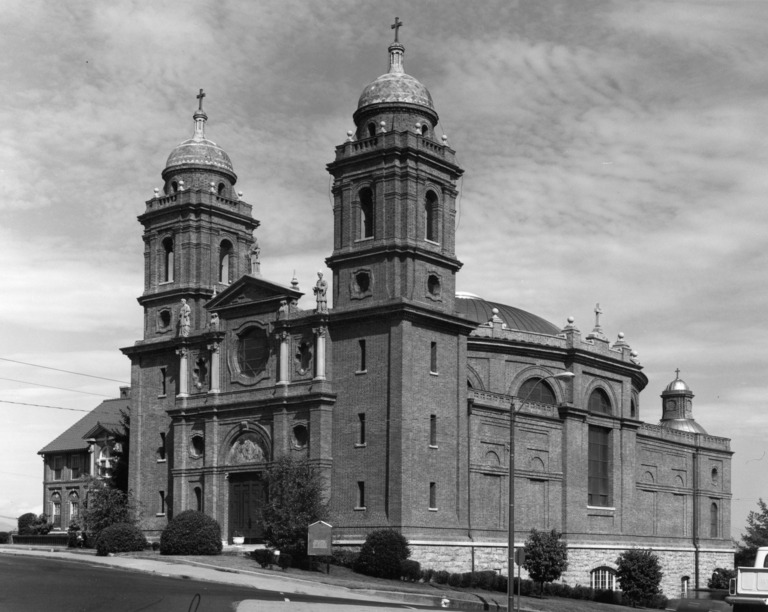
Basilica of St. Lawrence
Contributors:Samuel I. Bean, stonemason; Rafael Guastavino, Sr., architect; Frederick B. Miles, sculptor; Richard Sharp Smith, architect; Rafael Guastavino, Jr., architect and builderVariant Name(s):St. Lawrence Catholic Church
Dates:1905-1909
Location:Asheville, Buncombe CountyStreet Address:97 Haywood St., Asheville, NC
Status:Standing
Type:Religious
Images Published In:Catherine W. Bishir, North Carolina Architecture (1990).
Catherine W. Bishir, Michael T. Southern, and Jennifer F. Martin, A Guide to the Historic Architecture of Western North Carolina (1999).
David R. Black, Historic Architectural Resources of Downtown Asheville, North Carolina (1979).
Douglas Swaim, ed., Cabins and Castles: The History and Architecture of Buncombe County, North Carolina (1981).Note:Famed Spanish architect-builder Guastavino and Smith worked together on the imposing brick church, where the broad dome and other elements show Guastavino’s unique self-supporting tile construction and other tilework, which he manufactured at his estate near Black Mountain. Guastavino is entombed in the church. Drawings survive in the Richard Sharp Smith Drawing Collection, Asheville Art Museum, Asheville, North Carolina. See http://d.lib.ncsu.edu/collections/catalog?utf8=%E2%9C%93&f[classification_facet]=Richard+Sharp+Smith+Collection&q=St.+Lawrence.
Frederick B. Miles, who like Guastavino and Smith, had come to Asheville to work on Biltmore, was commissioned to carve a stone angel for the basilica. The church was elevated to the status of a basilica in 1993. Rafael Guastavino, Jr., completed the edifice after his father’s death.
Biltmore Estate
Contributors:Samuel I. Bean, stonemason; John T. Corbin, stonecutter; Rafael Guastavino, Sr., builder; Richard Howland Hunt, assistant architect; Richard Morris Hunt, architect; Richard Sharp Smith, supervising architectDates:1888-1895
Location:Asheville, Buncombe CountyStreet Address:Biltmore Ave., Asheville vicinity, NC
Status:Standing
Type:Agricultural
ResidentialImages Published In:Paul R. Baker, Richard Morris Hunt (1980).
Catherine W. Bishir, North Carolina Architecture (1990).
Catherine W. Bishir, Michael T. Southern, and Jennifer F. Martin, A Guide to the Historic Architecture of Western North Carolina (1999).
John Morrill Bryan, Biltmore Estate: The Most Distinguished Private Place (1994).
Susan Stein, ed., The Architecture of Richard Morris Hunt (1986).
Central Methodist Episcopal Church
Contributors:Samuel I. Bean, stonecutter and stone contractor; John T. Corbin, stonemason; Reuben H. Hunt, architect; J. M. Westall, builderVariant Name(s):Central United Methodist Church
Dates:1900-1905; 1924 [addition]
Location:Asheville, Buncombe CountyStreet Address:27 Church St., Asheville, NC
Status:Standing
Type:Religious
Images Published In:Catherine W. Bishir, Michael T. Southern, and Jennifer F. Martin, A Guide to the Historic Architecture of Western North Carolina (1999).
Note:Asheville’s Methodist congregation began fundraising for a new church in 1899 and soon commissioned a design from Hunt. On August 1, 1901, the Asheville Citizen reported that Hunt had visited Asheville recently, “bringing with him the plans and specifications for the proposed structure,” from which the paper printed an illustration. The Manufacturers’ Record of Sept. 5, 1901, reported that the congregation had let the contract to Asheville builder J. M. Westall. A delay ensued when the quarterly Methodist conference advised abandoning the project, but the congregation persisted. In 1902 the plans were returned to Hunt for changes suggested by a new building committee, and Westall was engaged to superintend construction. The final design was similar to the original but adjusted to reduce the cost estimate from about $60,000 to $50,000. The cornerstone was laid on August 25, 1902; the Sunday school was ready for use in 1904; and the first service was held in the auditorium on November 5, 1905. Hunt subsequently planned a 1924 renovation and expansion (costing more than $200,000) including a large Sunday school addition.
City Auditorium
Contributors:Samuel I. Bean, stone contractor; Lindsey M. Gudger, architectDates:1939-1940
Location:Asheville, Buncombe CountyStreet Address:Asheville, NC
Status:Altered
Type:Public
Note:Built with WPA assistance, the auditorium opened on Jan. 6, 1940. It was incorporated into the current civic center, which was dedicated in 1974.
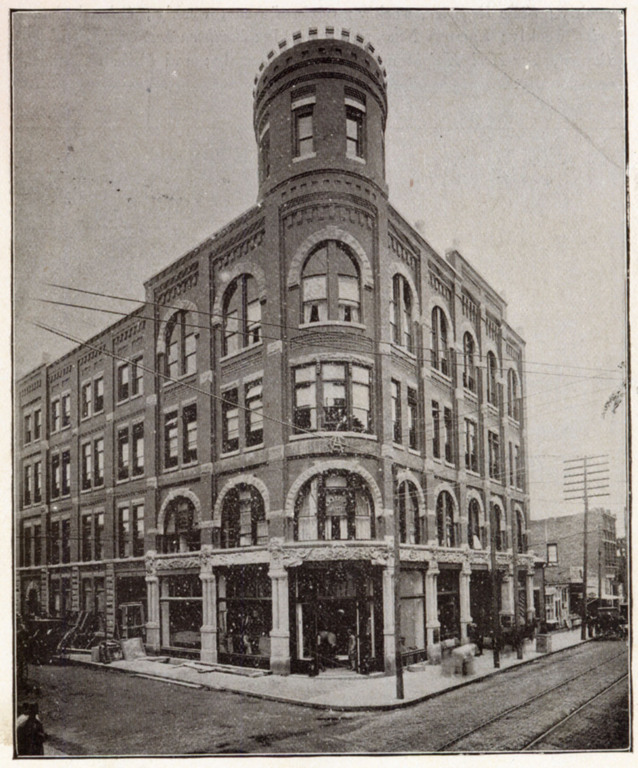
Drhumor Building
Contributors:Samuel I. Bean, stonecutter; A. L. Melton, architect; Frederick B. Miles, sculptor; J. M. Westall, builderDates:1895-1896
Location:Asheville, Buncombe CountyStreet Address:Patton Ave. at Church St., Asheville, NC
Status:Standing
Type:Commercial
Images Published In:Catherine W. Bishir, North Carolina Architecture (1990).
Catherine W. Bishir, Michael T. Southern, and Jennifer F. Martin, A Guide to the Historic Architecture of Western North Carolina (1999).Note:See Asheville Citizen-Times, November 21, 1895; June 24, 1896. The building originally had a tower atop the corner bay. That feature was removed in the 20th century, and the entrance was shifted to Patton Avenue and given a large arched frame. Frederick B. Miles’s splendid stone carving reportedly included visages of local citizens as well as mythological and classical motifs. The building is one of the principal surviving examples of downtown Asheville’s late 19th century growth era.
Flatiron Building
Contributors:Samuel I. Bean, stonemason; Albert Carl Wirth, architectDates:1925-1926
Location:Asheville, Buncombe CountyStreet Address:10-20 Battery Park Ave., Asheville, NC
Status:Standing
Type:Commercial
Images Published In:Catherine W. Bishir, Michael T. Southern, and Jennifer F. Martin, A Guide to the Historic Architecture of Western North Carolina (1999).
David R. Black, Historic Architectural Resources of Downtown Asheville, North Carolina (1979).
Haywood Building
Contributors:Samuel I. Bean, contractor; William J. East, architectDates:1917-1919
Location:Asheville, Buncombe CountyStreet Address:38-58 Haywood St., Asheville, NC
Status:Standing
Type:Commercial
Images Published In:David R. Black, Historic Architectural Resources of Downtown Asheville, North Carolina (1979).
Note:East’s obituary in the Asheville Citizen (May 4, 1936) credited him with this building, but his name was not mentioned in the extensive newspaper accounts of its construction. A project begun by Paul Roebling, whose grandfather built the Brooklyn Bridge, the large complex, which originally included garages, was apparently the first major commercial building on Haywood St.
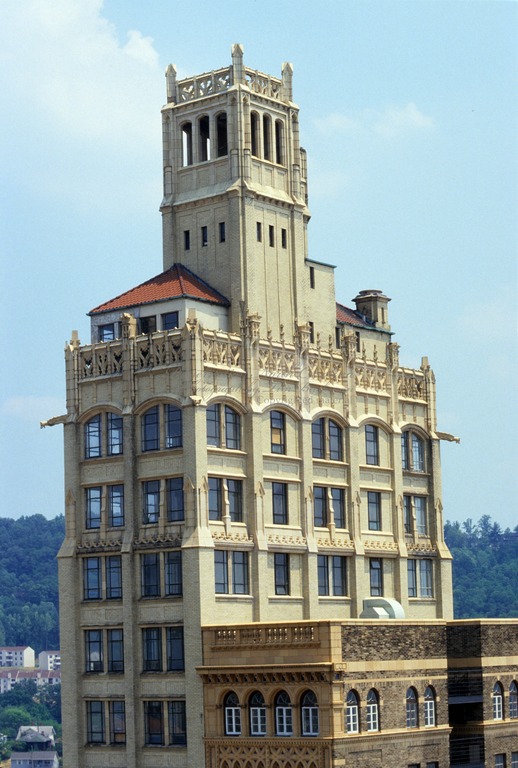
Jackson Building
Contributors:Dates:1923-1924
Location:Asheville, Buncombe CountyStreet Address:22 South Pack Square, Asheville, NC
Status:Standing
Type:Commercial
Images Published In:Catherine W. Bishir, North Carolina Architecture (1990).
Catherine W. Bishir, Michael T. Southern, and Jennifer F. Martin, A Guide to the Historic Architecture of Western North Carolina (1999).
David R. Black, Historic Architectural Resources of Downtown Asheville, North Carolina (1979).
Douglas Swaim, ed., Cabins and Castles: The History and Architecture of Buncombe County, North Carolina (1981).Note:The slender 13-story building on a tiny lot was the first skyscraper in western North Carolina. Designed by architect Greene for young real estate developer L. B. Jackson, the steel-framed brick building features elaborate glazed terra cotta ornament in a Gothic Revival style that emphasizes its height. It stands on the lot where Thomas Wolfe’s father had his monument shop. Originally, the building had more spires and a searchlight on top that cast a beam for 30 miles.
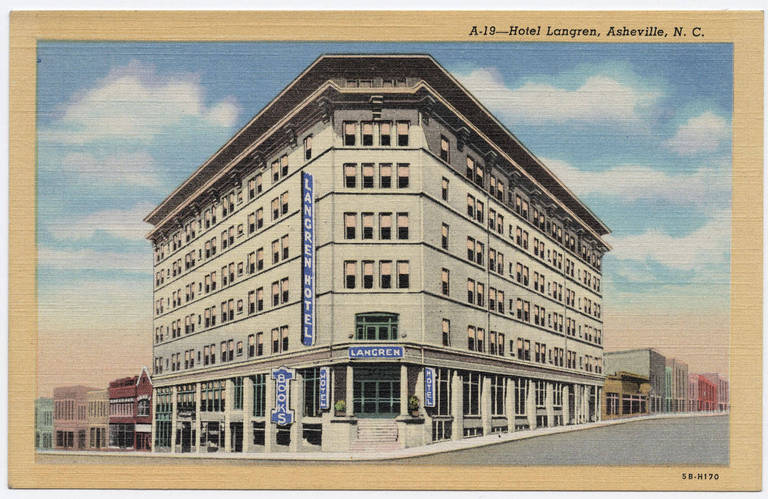
Langren Hotel
Contributors:Samuel I. Bean, stonemason; Albert Heath Carrier, attributed architect; Smith and Carrier, attributed architects; Richard Sharp Smith, attributed architectDates:Ca. 1908-1912
Location:Asheville, Buncombe CountyStreet Address:College St. at Biltmore Ave., Asheville, NC
Status:Standing
Type:Commercial
Note:The building’s construction history is complicated by a delay caused by financial problems. Although no architect is generally cited for it, the building was identified by A. H. Carrier to Joseph D. Robinson, Jr. as one the firm had been involved in. Further research may uncover documentation of the building’s architects and builders.
Municipal Building
Contributors:Samuel I. Bean, stone and tile contractor; Ronald Greene, architectDates:1925-1926
Location:Asheville, Buncombe CountyStreet Address:100 Court Plaza, Asheville, NC
Status:Standing
Type:Public
Note:The large structure, which replaced the former city hall on this site, was designed to contain the police and fire departments.
Public Service Building
Contributors:Beacham and LeGrand, architects; Samuel I. Bean, stone and tile contractor; Luther L. Merchant, contractorDates:1929
Location:Asheville, Buncombe CountyStreet Address:89-93 Patton Ave., Asheville, NC
Status:Standing
Type:Commercial
Images Published In:Catherine W. Bishir, Michael T. Southern, and Jennifer F. Martin, A Guide to the Historic Architecture of Western North Carolina (1999).
David R. Black, Historic Architectural Resources of Downtown Asheville, North Carolina (1979).Note:The 8-story, brick skyscraper features lavish, polychrome terra cotta detailing, including various classical motifs, on every façade. It was built by the Coxe estate with Carolina Power and Light as the first tenant.
Scottish Rite Cathedral and Masonic Temple
Contributors:Samuel I. Bean, stonemason; Albert Heath Carrier, architect; John T. Corbin, stonecutter; Smith and Carrier, architects; Richard Sharp Smith, architectDates:1913
Location:Asheville, Buncombe CountyStreet Address:80 Broadway, Asheville, NC
Status:Standing
Type:Fraternal
Images Published In:David R. Black, Historic Architectural Resources of Downtown Asheville, North Carolina (1979).